

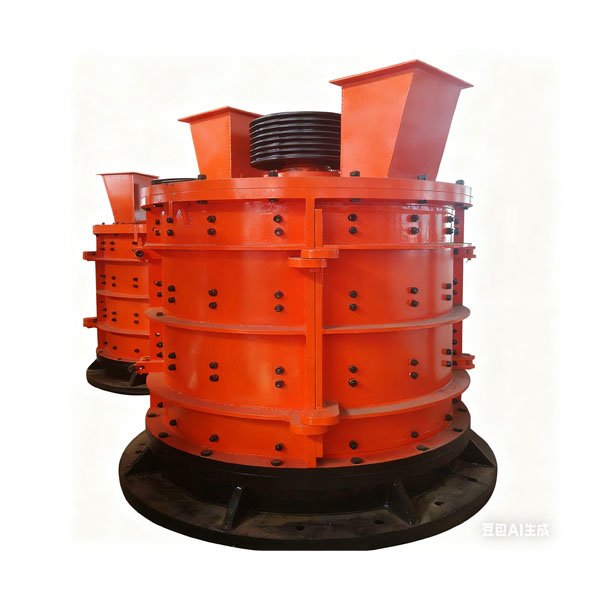
Ultra‑Fine Crusher
Ultra‑fine crusher is special equipment for the “more crushing, less grinding” process. It processes medium‑size feed into fine fractions of 0‑5 mm, reduces feed size for subsequent ball milling and greatly cuts grinding energy consumption. Widely applied in mineral processing, aggregate production, metallurgical slag and construction solid‑waste treatment. Main models include ultra‑fine cone crusher, high‑pressure grinding roll (HPGR), inertial cone crusher and high‑efficiency impact ultra‑fine crusher.
1. Main Types & Working Principle
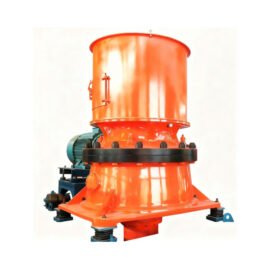
1. Ultra‑Fine Cone Crusher
‑ Principle: Lamination crushing; material is repeatedly compressed, sheared and ground between mantle and concave. ‑ Features: Fine & uniform product size; precise discharge‑gap adjustment; long service life of wear parts. ‑ Feed size: 15‑80 mm; product size: 0‑5 mm; capacity:10‑220 t/h. ‑ Application: Ore, quartz, granite, basalt; closed‑circuit ultra‑fine crushing for mineral processing, aggregate sand‑making.
2. High‑Pressure Grinding Roll (HPGR)
‑ Principle: Two counter‑rotating rolls apply static high pressure to generate numerous micro‑cracks inside ore particles. ‑ Features: Large reduction ratio, abundant internal micro‑cracks, substantial ball‑mill power saving; suitable for hard ores. ‑ Max feed ≤25 mm; high percentage of‑5 mm fraction; capacity:30‑850 t/h. ‑ Application: Large‑scale ultra‑fine crushing for iron ore, non‑ferrous ore and metallurgical slag.
3. Inertial Cone Crusher
‑ Principle: Inertial excitation drives mantle for high‑frequency vibratory crushing; flexible transmission with iron‑passing protection. ‑ Features: Extra‑large reduction ratio; ultra‑fine product even in open circuit; tolerant to iron pieces. ‑ Feed up to 80 mm; over 50 % of product below 5 mm in open‑circuit operation. ‑ Application: Medium‑small concentrators, steel slag, copper slag and other metallurgical slags.
4. High‑Efficiency Impact Ultra‑Fine Crusher
‑ Principle: High‑speed rotor realizes ultra‑fine crushing via impact, blow and attrition. ‑ Features: Compact structure, fine output; for medium‑hard materials. ‑ Application: Limestone, cement clinker, construction waste, manufactured sand.
2. Main Components
Machine frame, crushing working assembly (mantle / concave, high‑pressure rolls, rotor hammers), transmission unit, hydraulic / spring discharge‑gap adjusting device, lubrication system. Closed‑circuit screening system is required for most processes; coarse particles return for re‑crushing.
3. Key Features
‑ Produces 0‑5 mm ultra‑fine fractions, implements “more crushing less grinding”, cuts ball‑mill energy consumption by 20‑40 %. ‑ Open‑circuit or closed‑circuit operation; closed‑circuit delivers stable particle size. ‑ Handles materials from medium‑hard to high‑hard ores and metallurgical slags. ‑ High‑alloy wear‑resistant parts; hydraulic gap adjustment for quick particle‑size setting.
4. Typical Applications
Pre‑grinding preparation in ferrous & non‑ferrous concentrators; manufactured sand production; recycling of steel slag, copper slag, ferro‑chromium slag; processing of cement clinker and construction waste. Process flow: Secondary crushing → Ultra‑fine crushing → Screening → Ball milling.
5. Chinese Standards
‑ JB/T 13887 Ultra‑fine cone crusher ‑ JB/T 10890 High‑pressure grinding roll ‑ GB/T 25701 General safety requirements for mining machinery
6. Selection Guidance
- Large‑scale concentrator & hard ore: Prefer High‑Pressure Grinding Roll (HPGR)
- Medium‑capacity, good particle shape, abrasive ore: Prefer Ultra‑Fine Cone Crusher
- Metallurgical slag, iron‑contaminated feed, medium‑small plant: Prefer Inertial Cone Crusher
- Medium‑hard rock, sand‑making & solid waste: Adopt impact‑type ultra‑fine crusher
- Strict particle‑size requirement: Adopt closed‑circuit screening loop.
Reviews
There are no reviews yet.